What Are Large Language Models (LLMs)? A Guide for SMEs
 By: Albert Michael - Thursday, 20 August 2026 13:16:51 • 16 min read

What Are Large Language Models (LLMs)? A Practical Guide for Small Businesses
Large Language Models, commonly known as LLMs, are becoming one of the most important technologies behind modern artificial intelligence. They power AI chatbots, writing assistants, coding tools, customer-service systems, research assistants, document analyzers, and many other applications that businesses can use every day.
For small and medium-sized businesses, understanding LLMs does not require becoming an AI engineer. What matters is knowing what an LLM is, how it works at a practical level, what it can and cannot do, and how a business can use it responsibly to save time, improve productivity, and create better customer experiences.
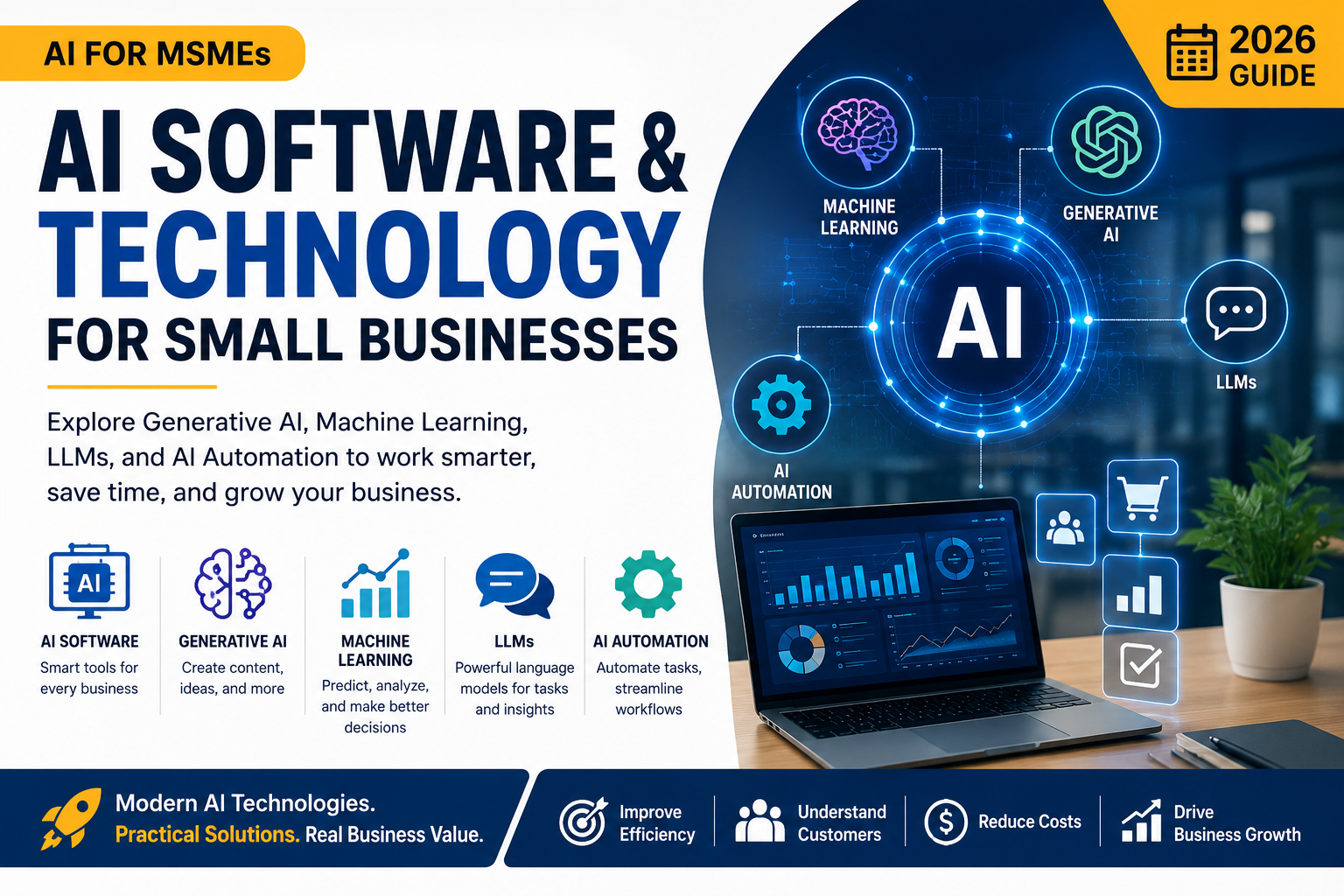
This guide explains what Large Language Models are, how LLMs work, how they differ from traditional software and machine learning, where they fit into generative AI, and how small businesses can turn LLM technology into practical business value.
What Is a Large Language Model (LLM)?
A Large Language Model (LLM) is an artificial intelligence model designed to understand and generate human language. LLMs are trained on very large collections of text and other data so they can recognize patterns in language, relationships between words, and common structures used in human communication.
In simple terms, an LLM is a type of AI that can process a request written in natural language and generate a response that is statistically likely to be relevant to that request.
For example, a small business owner could ask an LLM to:
- write a first draft of a product description;
- summarize a long business document;
- create ideas for a marketing campaign;
- rewrite an email in a more professional tone;
- generate frequently asked questions for a website;
- analyze customer feedback;
- create a social media content calendar;
- explain a technical concept in simple language; or
- help employees brainstorm solutions to everyday business problems.
LLMs are therefore not simply "chatbots." A chatbot can be one application built on top of an LLM, while the underlying language model can support many different types of business applications.
If you are completely new to AI, it is useful to first understand the broader concept of artificial intelligence and how it applies to small companies. Our complete guide to AI for MSMEs provides the broader foundation before going deeper into specific technologies such as LLMs.
How Do LLMs Work?
The technology behind an LLM is highly sophisticated, but the basic concept can be explained without advanced mathematics.
An LLM is trained to identify patterns in language. During training, the model processes enormous quantities of data and learns relationships between pieces of information. It learns, for example, that certain words commonly appear together, how sentences are structured, how questions are typically answered, and how different concepts relate to one another.
When a user provides a prompt, the model processes the input and generates an output based on patterns it learned during training.
1. Training data
LLMs are trained using large datasets. Depending on the model and its development process, these datasets can contain different types of text and other information.
The quality, diversity, relevance, and processing of training data can significantly influence the capabilities and limitations of an AI model.
2. Tokens
LLMs generally do not process language exactly as humans do. Text is broken into smaller units called tokens. A token can represent a whole word, part of a word, punctuation, or another small piece of text.
The model processes these tokens and uses them to understand the context of a request and produce a response.
3. Neural networks
Modern LLMs are based on large neural-network architectures. Many current language models use transformer-based architectures, which are particularly effective at processing relationships between different parts of a sequence.
This architecture allows the model to consider context when generating an answer rather than treating every word as an isolated piece of information.
4. Prediction
At a fundamental level, language generation involves predicting what tokens are likely to come next based on the context available to the model.
That simple description can sound less impressive than the results produced by modern AI systems, but the scale and sophistication of the models make the technology capable of producing remarkably complex outputs.
5. Fine-tuning and alignment
After initial training, some AI models can go through additional training or tuning processes designed to improve their ability to follow instructions, communicate effectively, and behave appropriately in different situations.
This helps transform a general-purpose model into an AI system that is more useful for real-world interactions.
LLMs vs. Generative AI: What's the Difference?
The terms LLM and generative AI are often used interchangeably, but they do not mean exactly the same thing.
Generative AI is the broader category of artificial intelligence systems that can generate new content. That content may include text, images, audio, video, code, or other forms of information.
An LLM is a specific type of AI model focused primarily on language and language-related tasks.
For example, a text-generation system may use an LLM to create an article, while an image-generation system uses a different type of model to create a picture from a text prompt.
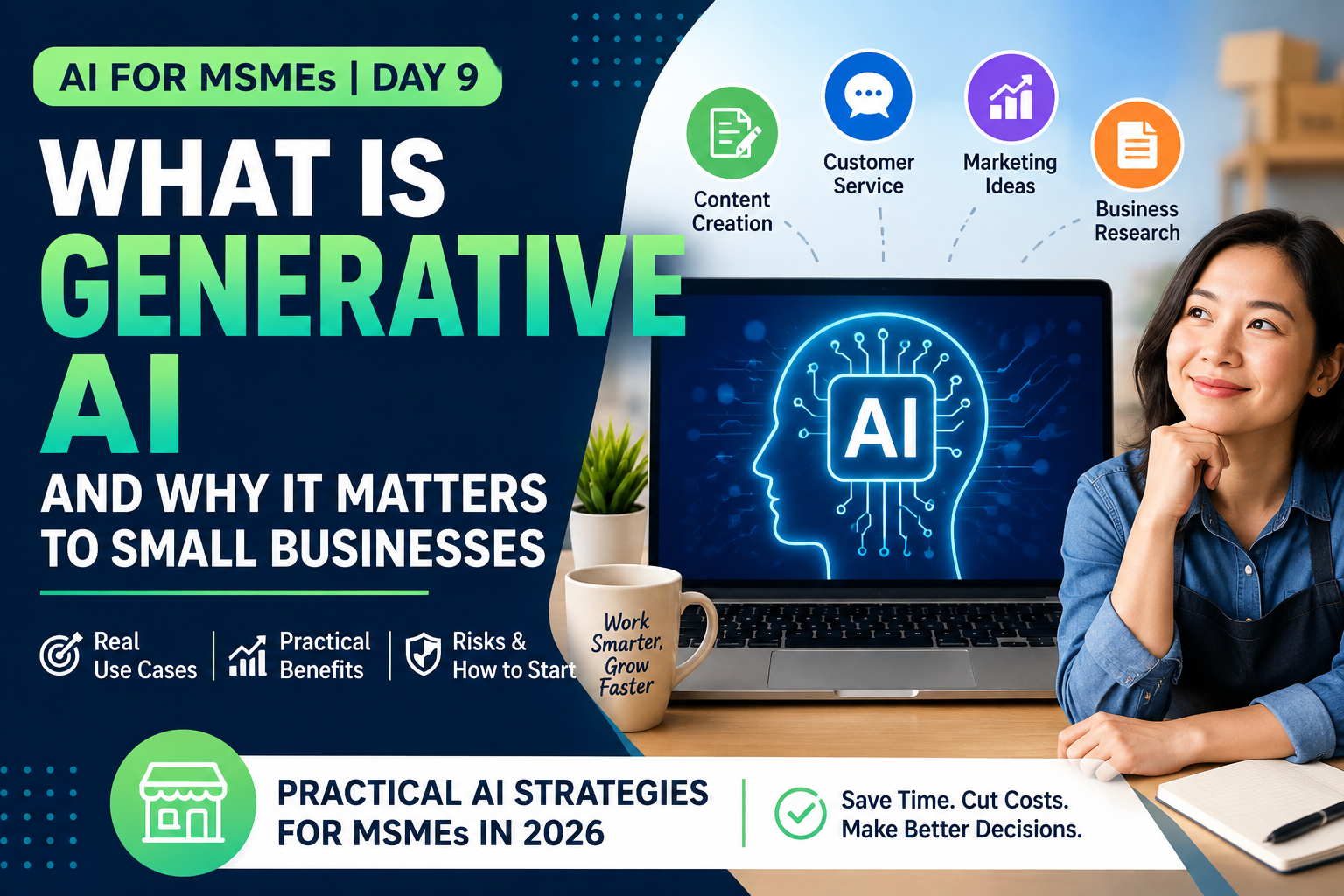
If you want to understand the broader technology category, our guide What Is Generative AI and Why It Matters to Small Businesses is a useful next step.
The distinction is important for business owners because choosing an AI solution should start with the business problem rather than the technology label. A company does not need an LLM simply because "AI" is trending. It needs the right tool for a specific workflow.
What Can LLMs Do for Small Businesses?
LLMs can be useful across many areas of a small business. Their biggest advantage is often not replacing employees but helping employees complete language-heavy tasks faster.
Content creation
Marketing teams and business owners can use LLMs to brainstorm blog topics, draft product descriptions, outline newsletters, develop social media ideas, and create first drafts of promotional material.
However, AI-generated content should still be reviewed by a human. A business should verify facts, add original expertise, and make sure the final content accurately reflects its products, services, customers, and brand voice.
Customer service
LLMs can help customer-service teams create responses to common questions, summarize customer conversations, and organize support information.
Businesses can also build AI-powered customer-service systems that use company documentation to provide answers. In higher-risk situations, human employees should remain responsible for decisions that require judgment, authorization, or sensitive information.
Email and communication
Small business owners spend considerable time writing emails, proposals, announcements, and internal messages. An LLM can help turn rough notes into a clearer first draft.
For example, an owner could provide several bullet points and ask the model to turn them into a concise professional email. The employee can then review and personalize the result before sending it.
Research and summarization
LLMs can help summarize long documents, extract key points, compare information, and turn complicated material into simpler explanations.
This can be particularly useful for small companies where employees have limited time to read lengthy reports, manuals, proposals, or internal documents.
Business brainstorming
An LLM can function as a brainstorming partner. A business owner can ask for potential marketing ideas, customer personas, product concepts, operational improvements, or questions to consider before launching a new service.
The key is to treat the model as an assistant rather than an unquestionable authority.
LLMs and AI Software: What's the Connection?
An LLM is a model, while AI software is the application or system that uses AI technology to perform a useful task.
This distinction is important for business owners who are evaluating AI tools.
For example, an LLM can provide the underlying language capabilities, while an AI software application can add a user interface, business rules, document storage, integrations, analytics, permissions, and other features.
In other words, an LLM can be thought of as an engine, while AI software can be the complete vehicle built around that engine.
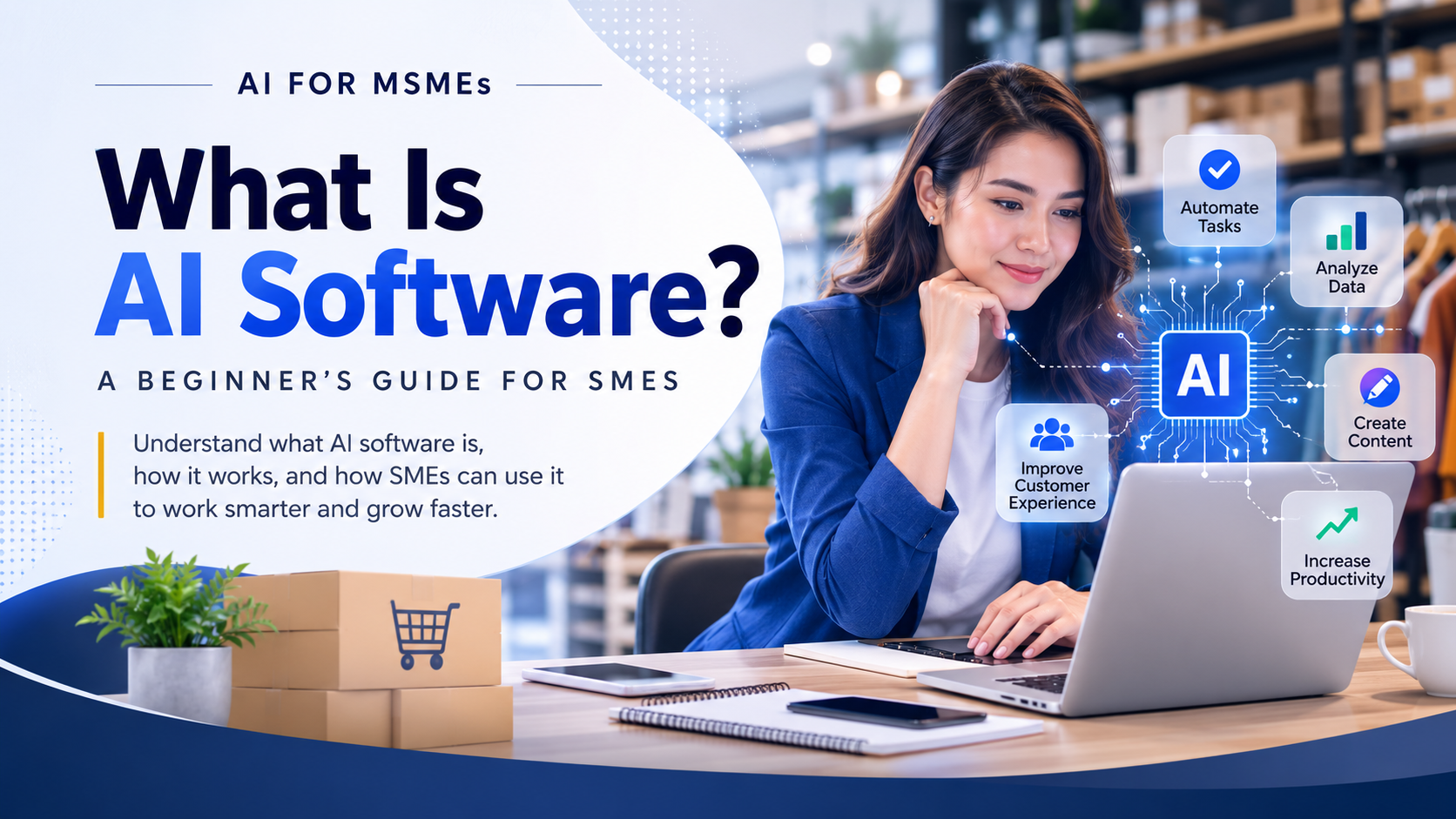
If you want a beginner-friendly explanation of the broader software category, read What Is AI Software? A Beginner's Guide for SMEs.
LLMs vs. Traditional Machine Learning
LLMs are part of the broader machine-learning ecosystem, but they are significantly different from the smaller machine-learning systems traditionally used for specific business problems.
A conventional machine-learning model may be trained to perform a narrowly defined task, such as predicting customer churn, detecting unusual transactions, forecasting demand, or classifying products.
An LLM is generally designed to work with language and can perform many different language-related tasks through natural-language instructions.
For small business owners, the difference can be summarized this way:
- Traditional machine learning: often optimized for a specific prediction or classification task.
- LLMs: designed to process and generate language across many different tasks.
- Generative AI: a broader category that includes systems capable of generating different types of content.
- AI software: applications that package AI capabilities into practical business tools.
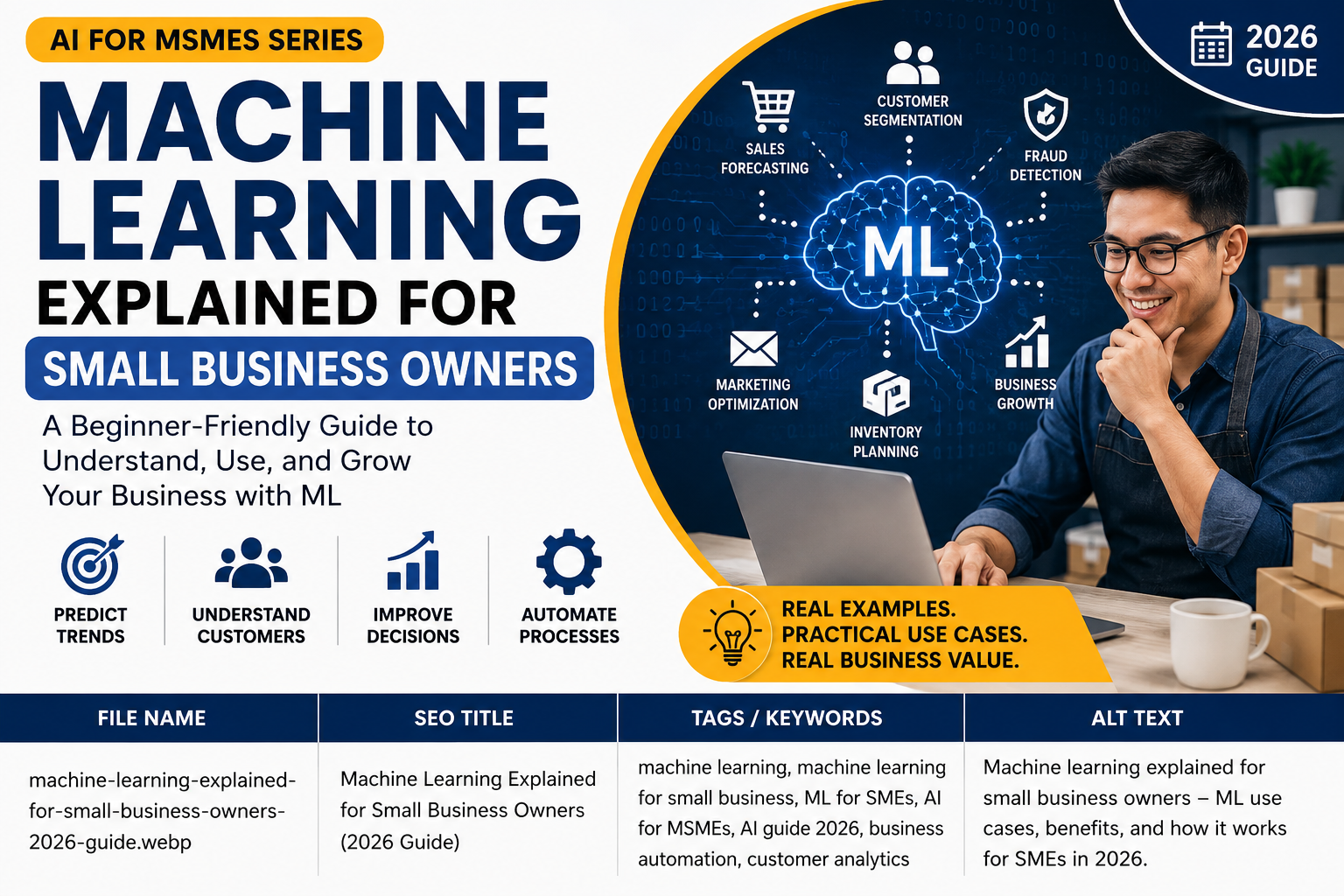
For a deeper introduction to machine learning, continue with Machine Learning Explained for Small Business Owners.
Why Are LLMs Important for SMEs?
Large companies have historically had an advantage because they could afford large teams, specialized software, analysts, consultants, and technical infrastructure.
LLMs can reduce some of the barriers to accessing advanced AI capabilities.
A small company may now be able to use natural-language AI tools for tasks that previously required specialized software or significant amounts of manual work.
For example, a five-person company could use an LLM to help with marketing research, customer communication, documentation, internal knowledge management, and content development without creating a machine-learning system from scratch.
This does not mean every small business should immediately automate everything. The strongest business cases usually start with repetitive, time-consuming, low-risk tasks where employees can easily review the AI output.
Real-World LLM Use Cases for Small Businesses
Retail businesses
Retailers can use LLMs to generate product descriptions, answer common customer questions, organize product information, draft promotional campaigns, and analyze customer feedback.
Restaurants and food businesses
Restaurants can use LLMs to create menu descriptions, promotional content, customer-service responses, social media calendars, and internal operating-document drafts.
Professional services
Consultants, agencies, accountants, designers, and other professional-service providers can use LLMs to summarize meetings, prepare document outlines, draft proposals, organize notes, and create client communication templates.
E-commerce businesses
E-commerce companies can use LLMs to support product content, customer support, category descriptions, marketing ideas, and internal knowledge management.
Local service businesses
Small service companies can use language AI to prepare appointment messages, answer frequently asked questions, create promotional campaigns, and improve website content.
What Are the Limitations of LLMs?
LLMs are powerful, but they are not infallible. Understanding their limitations is essential before using them in business operations.
They can generate incorrect information
An LLM can produce an answer that sounds convincing but is factually incorrect. This is sometimes referred to as an AI hallucination.
Businesses should therefore verify important claims, particularly information involving finances, law, medicine, safety, contracts, regulations, or customer-specific decisions.
They do not automatically understand your business
A general-purpose LLM does not automatically know your company's internal policies, inventory, customers, pricing, contracts, or operating procedures.
Business-specific information must be provided through appropriate systems, integrations, retrieval mechanisms, or carefully designed workflows.
Privacy matters
Businesses should think carefully before entering confidential information into an AI service. Internal policies should define what employees are allowed to submit to AI tools.
Particularly sensitive customer information, financial records, credentials, proprietary information, and confidential contracts should be handled according to appropriate security and privacy requirements.
AI output still needs human judgment
The best business use of LLMs is often human plus AI, rather than AI operating without oversight.
AI can produce a first draft, organize information, identify patterns, or suggest alternatives. A human should determine whether the final result is accurate, appropriate, ethical, and useful.
How to Start Using LLMs in a Small Business
Small businesses do not need to launch a complicated AI transformation project to start experimenting with LLMs.
Step 1: Identify repetitive tasks
Start by listing tasks that employees perform repeatedly, especially tasks involving text, documents, communication, or summarization.
Step 2: Choose a low-risk use case
Pick a task where an incorrect output would not create serious consequences. Drafting internal content or brainstorming marketing ideas can be safer starting points than automating sensitive financial decisions.
Step 3: Create clear prompts
Tell the AI what you want, provide relevant context, define the desired format, and explain the audience or business objective.
Instead of writing:
"Write a marketing email."
provide more useful instructions such as:
"Write a concise promotional email for existing customers of a local retail business. Use a professional but friendly tone. Highlight the weekend promotion, include a clear call to action, and keep the email under 150 words."
Better instructions generally make it easier to obtain useful results.
Step 4: Review the output
Check the facts, tone, calculations, names, dates, claims, and recommendations before using AI-generated material.
Step 5: Measure the result
Track whether the AI workflow actually saves time, improves quality, increases conversion rates, reduces support workload, or produces another measurable benefit.
If a tool does not create meaningful value, the business should reconsider the workflow instead of using AI simply because it is available.
How to Write Better Prompts for LLMs
Prompt quality can have a major influence on the usefulness of an LLM's output.
A practical business prompt can include five elements:
- Role: explain what perspective the AI should use.
- Task: clearly describe what you want.
- Context: provide relevant business information.
- Constraints: specify length, tone, audience, or limitations.
- Output format: explain how the answer should be structured.
For example, a business owner could ask an LLM to act as a marketing assistant, explain the company's target customer, request five campaign ideas, restrict the ideas to a specific budget, and ask for the results in a simple table.
This structured approach can produce more useful results than short and vague prompts.
Should Small Businesses Build Their Own LLM?
For most small businesses, building a large language model from scratch is unnecessary.
Training a modern foundation model requires substantial computing resources, data, engineering expertise, infrastructure, evaluation systems, and ongoing maintenance.
Most SMEs are better served by using an existing AI model through a software application or API and focusing their resources on the business problem they are trying to solve.
A company may eventually build a customized AI workflow around an existing model. This can include company documents, business rules, databases, internal knowledge, automated workflows, and integrations.
The important point is that using an LLM does not mean a business needs to become an AI research company.
LLMs and the Future of Small Business
LLMs are likely to become increasingly integrated into everyday business software. Instead of opening a separate AI chatbot, employees may interact with AI directly inside customer relationship management systems, office applications, help desks, accounting platforms, e-commerce systems, and other business tools.
This shift could make AI less visible but more useful.
The competitive advantage may therefore come less from simply having access to an LLM and more from knowing how to integrate AI into effective business processes.
Businesses that develop clear AI policies, train employees, protect sensitive information, verify AI output, and measure business outcomes will be better positioned to benefit from the technology.
LLM Best Practices for SMEs
Before deploying an LLM in a business workflow, consider these practical principles:
- Start small: test one workflow before expanding AI across the organization.
- Keep humans involved: maintain appropriate review for important decisions.
- Protect confidential data: establish rules for what employees can submit to AI systems.
- Verify important information: never assume an AI response is automatically correct.
- Measure ROI: track time saved, costs reduced, quality improvements, or revenue impact.
- Document workflows: create repeatable processes rather than relying on random prompts.
- Train employees: responsible AI use requires more than simply giving employees access to a chatbot.
- Review AI tools regularly: technology changes quickly, so businesses should periodically evaluate whether their current tools remain appropriate.
Frequently Asked Questions About LLMs
What does LLM stand for?
LLM stands for Large Language Model. It is an AI model designed to process and generate human language and can support tasks such as writing, summarization, question answering, analysis, and content generation.
What is an LLM in simple terms?
An LLM is an AI system trained on large amounts of data that can understand and generate language. People can interact with it using natural-language instructions to perform many language-related tasks.
Is an LLM the same as generative AI?
No. An LLM is a type of AI model primarily focused on language, while generative AI is a broader category that includes systems capable of generating text, images, audio, video, code, and other content.
How can small businesses use LLMs?
Small businesses can use LLMs for content creation, customer-service assistance, email drafting, document summarization, brainstorming, research, internal documentation, marketing, and other language-intensive workflows.
Can an LLM replace employees?
An LLM can automate or accelerate certain tasks, but it does not automatically replace the need for human judgment. In many businesses, the most effective approach is to use AI to assist employees with repetitive work while people remain responsible for important decisions and quality control.
Can LLMs make mistakes?
Yes. LLMs can generate inaccurate, incomplete, outdated, or misleading information. Important information should therefore be checked by a qualified person before it is used in business decisions or published publicly.
Do small businesses need to build their own LLM?
Usually not. Most small businesses can use existing AI models through software applications or APIs. Building a model from scratch is generally expensive and technically complex compared with integrating an existing model into a specific business workflow.
What is the difference between an LLM and machine learning?
LLMs are part of the broader machine-learning field. Traditional machine-learning models are often designed for specific prediction or classification tasks, while LLMs are designed primarily to process and generate language and can support many different language-based tasks.
Final Takeaway: LLMs Are Tools, Not Business Strategies
Large Language Models represent one of the most important developments in modern AI because they make sophisticated language capabilities accessible through natural-language interaction.
For small and medium-sized businesses, the most important question is not simply, "Which LLM should we use?" The better question is, "Which business problem can this technology solve better, faster, or more efficiently?"
LLMs can help businesses create content, communicate with customers, summarize information, support employees, research ideas, and automate repetitive language-based work. At the same time, businesses must recognize their limitations, verify important information, protect sensitive data, and maintain appropriate human oversight.
Understanding LLMs also provides an important foundation for understanding the wider AI ecosystem. From AI for MSMEs and AI software to generative AI and machine learning, these technologies are increasingly becoming connected parts of modern business workflows.
For an SME, adopting AI does not have to mean transforming the entire company overnight. A better approach is to start with one useful problem, test the technology, measure the result, improve the workflow, and expand only when the business value is clear.
That is where LLMs become truly valuable: not as technology for technology's sake, but as practical tools that help people work smarter.