FIFA Faces Pressure After Argentina Players Display Falklands Banner Following World Cup Victory
 By: Albert Michael - Monday, 20 July 2026 00:00:17 • 3 min read
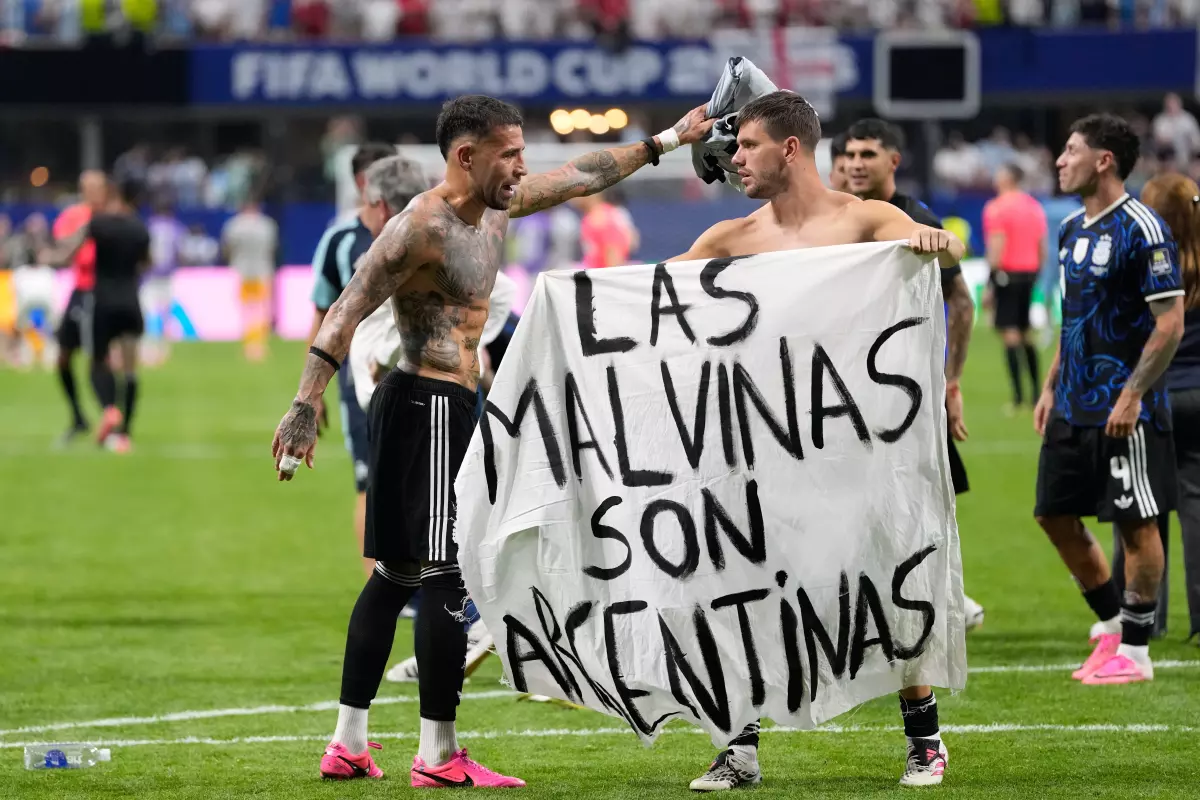
LONDON — FIFA is facing renewed scrutiny after Argentina's players celebrated their World Cup semifinal victory over England by displaying a banner asserting Argentina's claim over the Falkland Islands, a long-disputed British overseas territory known in Argentina as the Malvinas.
The incident has sparked political debate beyond football, with British officials urging the sport's governing body to determine whether the display violated FIFA's rules on political messaging during official competitions.
Celebration Sparks Diplomatic Reaction
Following Argentina's 2-1 victory over England, several players were photographed holding a banner reading, "Las Malvinas son Argentinas" ("The Malvinas are Argentine"). The slogan reflects Argentina's longstanding claim over the islands, which remain under British administration.
The British government responded by reaffirming its position that the future of the Falkland Islands should be determined by the islanders themselves. Officials argued that international sporting events should not become platforms for geopolitical disputes.
FIFA's Neutrality Under the Spotlight
FIFA's disciplinary regulations prohibit political, ideological, or offensive messages at official matches. Previous tournaments have seen fines and suspensions issued to players and national federations for displaying banners linked to territorial disputes.
The latest controversy has prompted questions over whether FIFA will apply those rules consistently, particularly given the organization's previous handling of similar cases involving other national teams.
A Rivalry Shaped by History
Football matches between Argentina and England have often carried historical significance beyond sport. The 1982 Falklands War remains a deeply sensitive chapter for both nations, influencing public sentiment whenever the two sides meet on the international stage.
For many supporters in Argentina, references to the Malvinas symbolize national identity and historical claims. In the United Kingdom, however, the issue centers on the principle of self-determination for the islands' residents.
What Happens Next?
As of now, FIFA has not announced whether disciplinary proceedings will be opened. If an investigation is launched, the organization may need to determine whether the banner falls within its restrictions on political expressions during official competitions.
The outcome could influence how FIFA addresses similar incidents in future international tournaments, particularly as political symbolism increasingly intersects with global sporting events.
Editorial Perspective
The controversy highlights the difficult balance international sports organizations face when national identity, historical disputes, and global competition converge. While football is intended to unite audiences worldwide, moments like this demonstrate that major tournaments can also become stages where unresolved geopolitical issues re-emerge.
Regardless of FIFA's eventual decision, the debate underscores the continuing challenge of maintaining political neutrality while overseeing competitions involving nations with deeply rooted historical conflicts.


.png "Ousman Dembele Won Ballon D'or Awards: World's Best Players Announced - Beritaja")